White and Pastel Epoxy Primers and Topcoats: The Economics of Pigment Concentration
SEP-White 50% TiO2 epoxy paste for white and pastel industrial coatings. Hiding at specified DFT, tinting base logic, recoat windows and heat resistance to 300 °C.
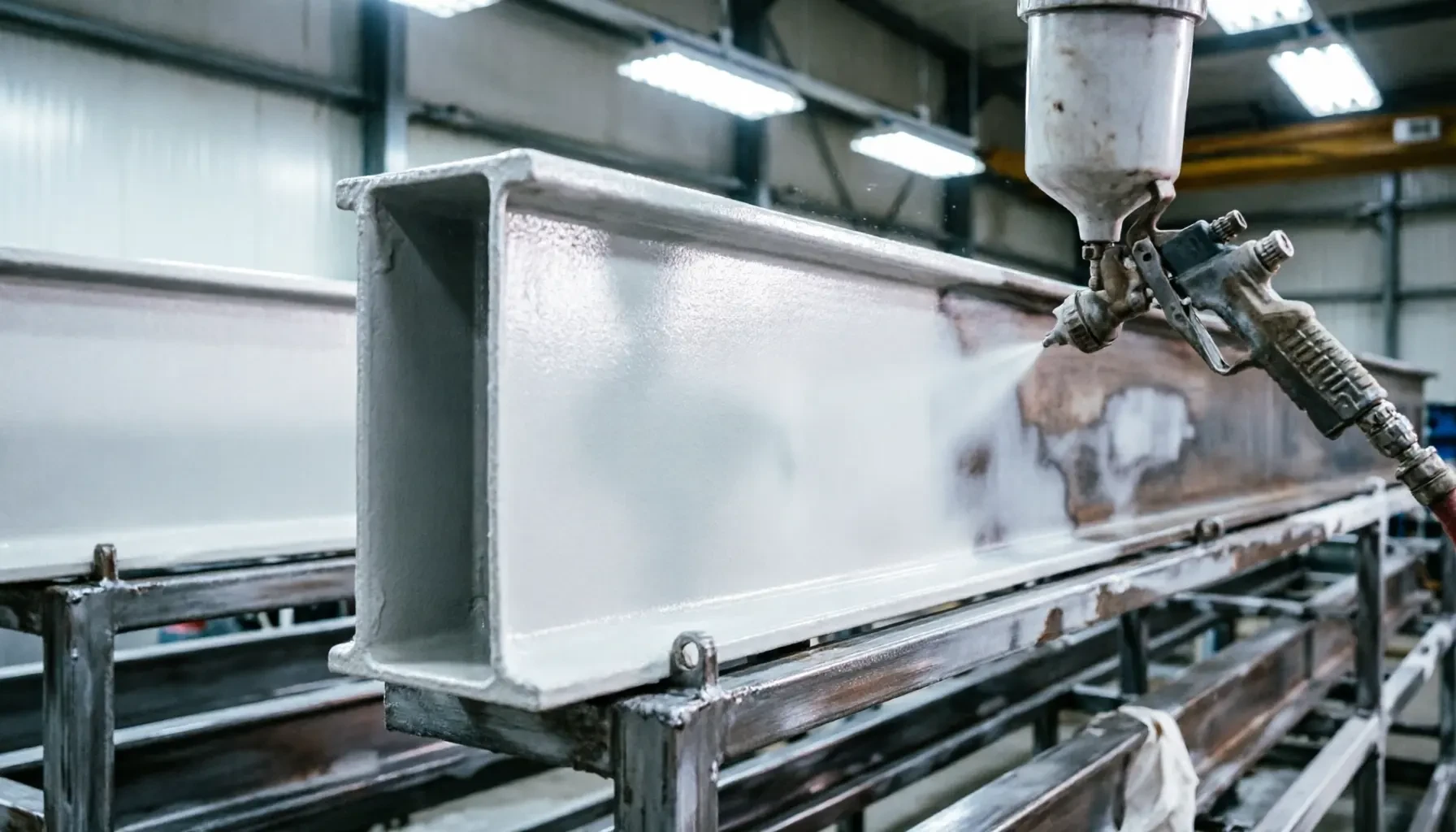
In protective and industrial coatings, white rarely appears alone. It appears as a pastel topcoat, as a tinting base for a customer-specified RAL or Pantone shade, as a primer that lets inspectors see coverage, and as a contrast layer under a darker finish. All four uses put the same demand on the paste: predictable hiding at a defined dry-film thickness, and predictable colour when combined with chromatic pastes.
1. The tinting-base problem
A white paste used as a tinting base has to do two jobs at once. It must provide enough opacity for the final film, and it must not swamp the chromatic paste that sets the hue. A paste with low pigment concentration forces the formulator to add large amounts of white to reach hiding, which then desaturates the shade and pushes the colour match away from the target. SEP-White at 50% rutile TiO2 gives the formulator a stronger lever: hiding is reached with less mass, so the chromatic component stays proportionally larger and the shade is easier to hold batch to batch.
2. Hiding at the specified film thickness
| Coating type | Typical DFT | What hiding depends on beyond pigment load |
|---|---|---|
| High-solids primer | 80–150 μm | Substrate tone, surface profile, application uniformity |
| High-solids topcoat | 100–250 μm | Primer colour, gloss target, overspray control |
| Thick protective system | 250 μm and above | Film build verification, not pigment load |
The practical rule is to test contrast ratio at the thinnest DFT the specification allows, over the actual primer, rather than on a white drawdown card.
3. Heat resistance is a pigment property, not a system property
The cured film of SEP-White is rated to 300 °C, and the pigment system is recorded at grade 8 light fastness with excellent weathering resistance. Those figures are useful for stoving and high-temperature cure schedules, and for coatings that see hot equipment surfaces. They do not mean the epoxy matrix is a 300 °C service coating. Aromatic epoxy loses gloss and mechanical integrity well below that temperature in continuous service, so the 300 °C figure should be quoted as a short-term pigment and film property, not as a continuous rating.
4. Recoat and process considerations
- Non-volatile content above 98% means the paste adds essentially no solvent to the system, which keeps VOC calculations and recoat windows predictable.
- Fineness of grind at 3–5 μm supports thin-film gloss and reduces the risk of surface texture from coarse pigment.
- Add to the resin component before hardener; never into the amine curing agent.
- Where phthalocyanine blue or green is used in the same shade, allow equilibration time before judging the final tone.
5. Cost structure for high-volume coaters
For a coater running hundreds of tonnes a year, the pigment line is driven by delivered hiding. At equal hiding, a 50% paste consumes roughly 60% of the mass a 30% paste would require. The saving is not only in paste cost but in inventory volume, drum handling, warehouse space and the labour attached to each addition. This is the argument to put in front of a purchasing team that compares price per kilogram only.
6. Limits
SEP-White does not provide corrosion inhibition, adhesion promotion, UV stabilization, flame retardancy or chemical resistance by itself. Those functions belong to the primer chemistry, the curing system and the topcoat selection. White appearance also does not certify a hygiene or cleanroom classification. Product page: SEP-White Epoxy White. Coating overview: industrial coatings.