White Epoxy in Architectural Panels, Translucent Elements and Furniture Inlays
SEP-White for white architectural resin panels, translucent elements and furniture inlays. Opacity versus translucency, thickness control, UV limits and phr guidance.
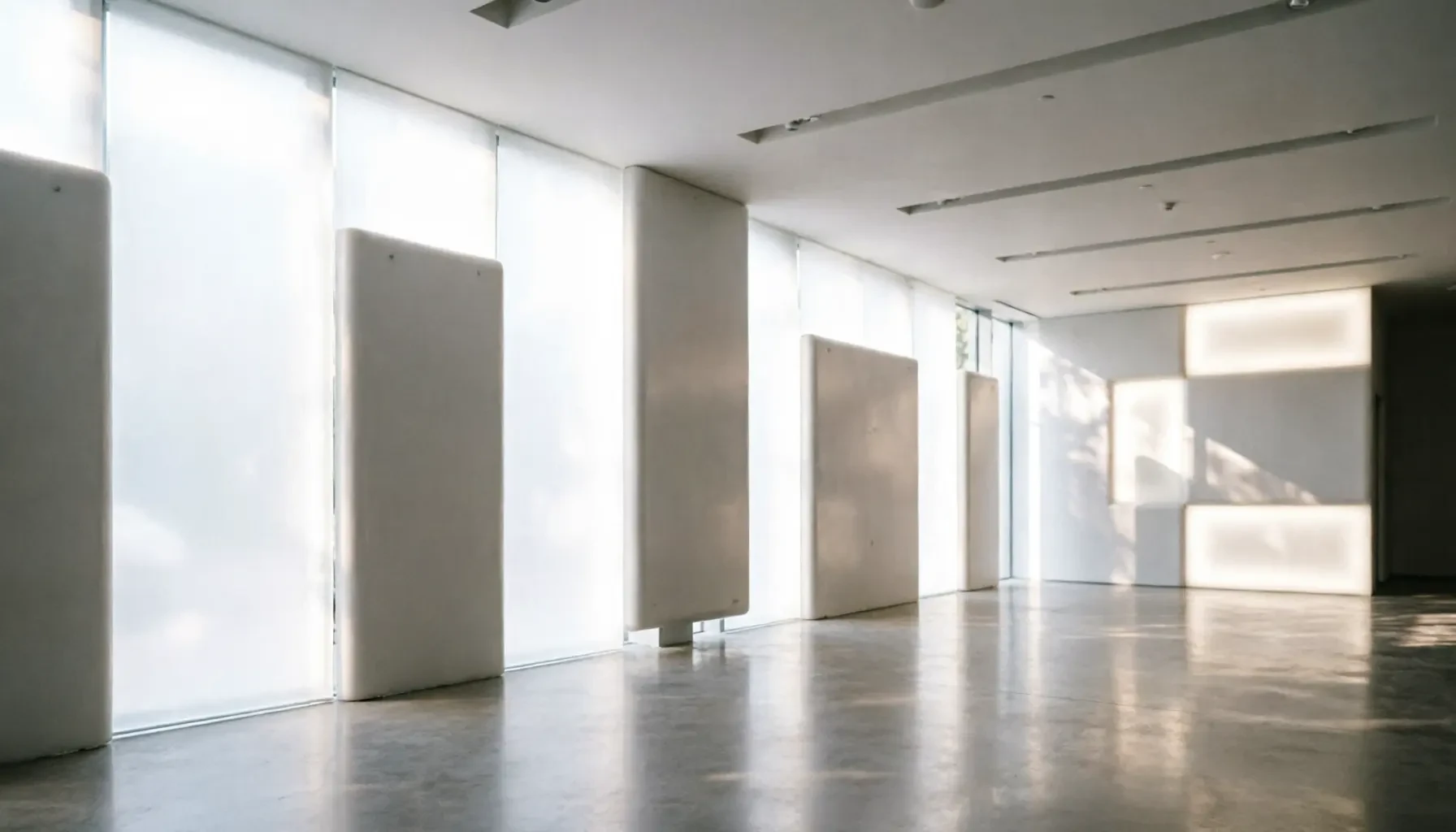
Architectural resin work sits between the decorative and the technical. A panel may need to be solid and opaque on one project and deliberately translucent on another, and the difference is controlled by pigment load and thickness rather than by a different product. Understanding that relationship is what allows one paste to serve both.
1. Where white resin appears in architecture and interiors
- Opaque white wall panels, column cladding and reception features
- Translucent resin panels used with backlighting for signage and partitions
- Furniture inlays, table surfaces and decorative screens
- Washroom panels, vanity surrounds and wet-area elements
- Display fixtures and retail fit-out components
2. Opacity and translucency are a load-and-thickness relationship
White pigment scattering is what creates both effects. At low addition in a thin section, light passes through with scattering, producing translucency. Raise the load or the thickness, and the same paste becomes opaque.
| SEP-White on Part A | Effect in a 6–10 mm section | Effect in a 2–3 mm section |
|---|---|---|
| 1–2 phr | Translucent, strong light diffusion | Light haze, visible substrate |
| 3–5 phr | Near-opaque with slight glow at edges | Opaque |
| 6–8 phr | Fully opaque | Fully opaque, higher viscosity |
For backlit panels, the target is usually uniform diffusion without hot spots. That is a lighting-and-thickness design question as much as a pigment question, and it should be prototyped at the final geometry.
3. Thick sections and exotherm
Architectural castings are frequently 10 mm or more, and thick pours concentrate reaction heat. White surfaces hide the early signs of an overheating centre, so distortion and internal voids can appear before anyone notices. Control pour mass per stage, ambient temperature and hardener selection, and follow the resin supplier's approved pour depth.
4. UV exposure is unavoidable
Interior panels see indirect daylight; exterior cladding sees direct sun. The pigment system is rated grade 8 light fastness, and the cured film to 300 °C, but aromatic epoxy still yellows and chalks under UV. Exterior architectural work needs a UV-stable topcoat or a resin system selected for outdoor exposure, and the yellowing performance must be verified on the finished panel.
5. Fire and building compliance
Architectural elements are usually subject to building-code reaction-to-fire requirements. SEP-White provides no flame retardancy and does not certify any fire classification. Compliance belongs to the complete panel system, tested under the applicable standard for the project's jurisdiction. Never present a pigment or a colour paste as evidence of fire performance.
6. Cost note for panel fabricators
Panel production consumes paste continuously, and at an equal hiding target a 50% paste delivers substantially more titanium dioxide per kilogram than a diluted product. For a fabricator running standard white lines, that translates into fewer drums handled per shift and a smaller inventory footprint.
7. Limits
SEP-White does not provide UV stabilization, flame retardancy, impact modification or structural performance. Decorative appearance and colour photographs are not colorimetric certificates, and an installed photograph is not evidence of compliance. Product page: SEP-White Epoxy White. Construction overview: building materials.